
Remember that all our blog posts are hand-made by real locals, trying to help tourists and people living in Italy enjoy the most of everything
🔥 Summer 2026: how hot?
A heat dome over Western Europe + a developing El Niño point to a hotter-than-average season. Figures are averages — plan for spikes.
Let’s not sugarcoat it: summer 2026 is going to be hot. Not “pleasant Mediterranean warmth” hot — we mean the kind of heat that makes the asphalt shimmer and turns a midday stroll into an act of quiet heroism. Forecasters have been tracking a powerful heat dome building over Western Europe since late spring, with Iberia, France and Italy squarely in the firing line as El Niño gathers strength into the back half of the year. Translation for you, the traveler: pack light, plan smart, and read this guide before you book anything.
We’ve spent years helping visitors enjoy Italy the way locals actually do — and that includes the part most guidebooks pretend doesn’t exist. So this is your two-in-one survival manual: how to handle the most brutal Italian summer in recent memory, and how to navigate the country’s cannabis scene safely, city by city, now that the rules have changed dramatically. (More on that below — it’s important, and most outdated blogs will get you in trouble.)
Whether you’re heading to chaotic, glorious Naples, eternal Rome, stylish Milan, or the postcard-perfect coast, here’s everything you need.
First, the part everyone gets wrong: the 2026 cannabis legal reality
If you read an article from 2023 telling you to pop into a “cannabis light” shop for some legal low-THC flower — close that tab. That era is over.
In April 2025, Italy passed a sweeping security decree (Decree-Law 48/2025) that reclassified hemp inflorescences — and products derived from them — as narcotics, regardless of THC content. The once-booming “cannabis light” market that had thousands of shops across the country was effectively dismantled overnight, with tens of thousands of jobs lost. As of 2026, hemp flower is no longer legally sold, and shops still offering it are operating illegally.
What’s still tolerated? CBD oil and extracts derived from hemp seeds and stalks remain in a gray zone, and CBD cosmetics persist in many shops. Medical cannabis is legal but requires an Italian doctor’s prescription — practically out of reach for tourists. Recreational use itself isn’t a criminal matter for personal quantities (it’s an administrative offense, with possible fines and document confiscation), but selling and supplying very much are.
The honest local take: enforcement varies wildly by region and even by neighborhood. Northern and university cities (Milan, Bologna, Turin) tend toward more relaxed attitudes; historic tourist centers can be stricter; and southern regions like Puglia, Basilicata and Calabria are best treated as zero-tolerance. None of this is legal advice — it’s street-level reality. Be discreet, be respectful, and don’t be the loud tourist lighting up in front of a carabinieri station in Piazza del Plebiscito.
For the full picture, we keep our dedicated guides updated — start with our breakdown of weed in Naples and how to buy weed in Naples without getting scammed.
Naples: the heat, the chaos, the unbeatable summer energy
Finding Quality Weed in Naples?
Join our private Telegram community for verified locations, real-time safety updates, and direct connections with trusted local experts.
Connect with Naples ExpertsNaples in summer is a fever dream in the best possible way. The city doesn’t slow down for the heat — it leans into it, with late dinners, sea breezes off the Gulf, and a nightlife that only really wakes up after sunset.
But make no mistake: by midday in July and August, the centro storico can feel like a pizza oven (fittingly). Our survival rules:
- Go vertical. Escape to Vomero, the leafy hilltop neighborhood that’s noticeably cooler and breezier than the lower city. The Petraio steps and the funicular get you up there fast. Read our full Naples neighborhoods guide to plan your base wisely.
- Hit the water early. The best beaches near Naples and the islands fill up fast; locals are on the ferry by 8am.
- Respect Ferragosto. Around August 15, much of the city shuts down as Neapolitans flee to the coast. Tourist centers stay open, but residential districts can feel like ghost towns — plan accordingly.
- Move like a local. The summer heat makes Naples’ transport quirks even more punishing. Our Naples transportation guide will save your sanity.
As for the cannabis scene, Naples remains one of Italy’s most accessible cities, but the post-2025 landscape means relying on word of mouth and trusted local contacts rather than shops. Discretion is everything in the southern heat. And if you’re weighing Naples against the capital, our honest comparison of Rome vs Naples is a good starting point.
Rome: surviving the Eternal City when it’s an Eternal Furnace
Rome in summer is magnificent and merciless. Daytime highs regularly hit around 30–35°C with thick humidity, and the open piazzas offer zero shade. If you’re searching for weed in Rome this summer, the same 2025 rules apply — the “cannabis light” shops you may have read about are gone, and enforcement around tourist-heavy zones like Termini and the Colosseum can be active.
Our Roman survival kit:
- Reverse your schedule. Do the big sights at opening (the Colosseum and Vatican Museums before 9am) and treat midday as siesta. Romans do.
- Drink from the nasoni. Those cast-iron street fountains pour cold, free, drinkable water all over the city. Use them constantly.
- Find the green. Villa Borghese, Villa Doria Pamphilj, and the leafy, laid-back San Lorenzo and Pigneto districts offer shade and a more local, relaxed evening vibe.
- Read up first. Our full guide to weed in Rome covers the nuances.
Milan and the North: heat with a side of style
Milan gets seriously hot and humid in summer, and notably empties out in August as locals decamp to the lakes and coast. The upside: shorter queues at the Duomo and a calmer city. The Navigli district has historically had a more relaxed reputation, though police presence around the Duomo and Centrale station is real — don’t mistake atmosphere for a free pass.
For genuine relief from the heat, do what Milanese do and escape to Lake Como or Maggiore. University cities like Bologna — home to Italy’s oldest hemp fair, IndicaSativa Trade — and Turin carry the country’s more liberal attitudes. Our Bologna cannabis guide digs into that scene.
Florence: beautiful, historic, and dangerously hot
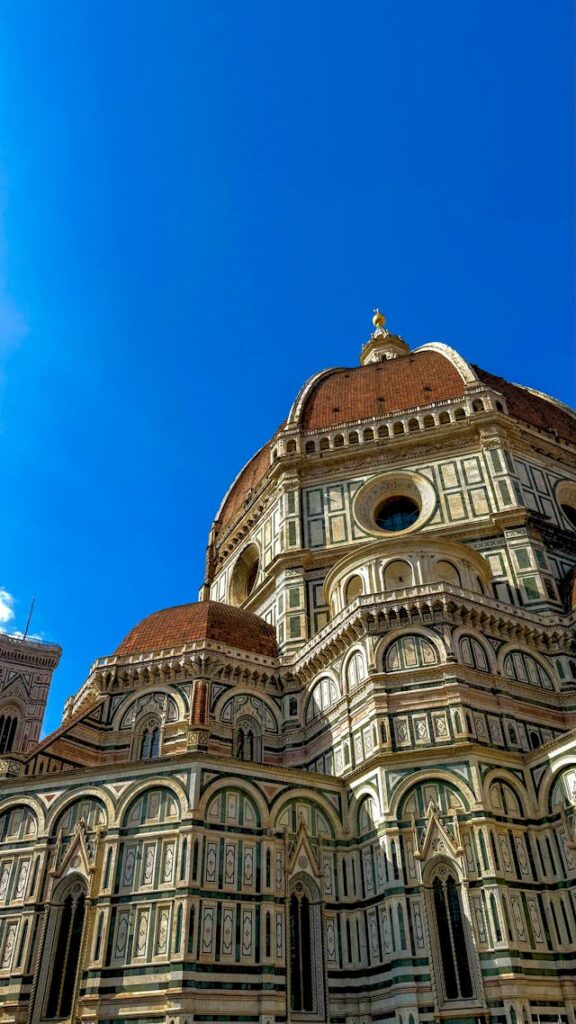
Let’s be honest about Florence in summer: it’s stunning, and it’s a furnace. Tucked into a river valley with little air circulation, the city consistently ranks among the hottest in Italy during July and August, with the stone-and-terracotta centro storico radiating heat well into the evening.
If you’re visiting, treat the heat with respect:
- Climb for the breeze. Head up to Piazzale Michelangelo at sunset for cooler air and the best panorama in the city.
- Book the Uffizi for the first slot and use the midday hours for shaded courtyards, churches and gelato.
- Escape to the hills. Fiesole, just above the city, is noticeably cooler and a local favorite for summer evenings.
On the cannabis front, the same 2025 national rules apply everywhere in Italy: the old “cannabis light” shops are gone, and Florence’s tightly-policed historic center is not the place to be careless. Tuscany leans moderate, but discretion is non-negotiable. For the wider regional picture, see our guide to weed in Florence.
Venice: a sweltering, sinking postcard
Venice in high summer is a paradox — impossibly romantic and genuinely uncomfortable. The humidity from the lagoon, the crush of cruise-ship crowds, and the total lack of shade in St. Mark’s Square make midday a test of endurance. The smell of the canals at low tide in August is, let’s say, characterful.
Survival tactics:
- Get lost early. Explore the quiet sestieri (Cannaregio, Castello, Dorsoduro) at dawn before the day-trippers arrive.
- Take the vaporetto for the breeze, and escape to the islands — Burano and the Lido beaches offer air and water.
- Duck into the cool. Doge’s Palace and the churches are blessedly shaded.
Veneto enforcement is unremarkable but real, and Venice is wall-to-wall police and tourists — keep it private. We always tell visitors: Venice is best appreciated slowly, in the early morning and late evening, never at high noon in August.
The coast: Amalfi, Positano and the exclusive enclaves
Summer 2026: city or coast?
- Sights, museums, AC escapes
- Cheaper than the coast in peak season
- Cities empty out in August — shorter queues
- Sea breezes make the heat bearable
- Beaches, islands, turquoise water
- But: big crowds & premium prices
When the cities become unbearable, the Amalfi Coast is where everyone with sense (and budget) heads. Positano, Amalfi and Vietri sul Mare trade summer heat for sea breezes and turquoise water — though expect serious crowds and serious prices in peak season. The cannabis scene here is far more discreet and exclusive than in the cities; our deep-dive on cannabis culture in Positano, Amalfi and Vietri explains the lay of the land. Pro tip: getting around the coast in summer is a logistical sport — read our driving in Italy and ZTL guide before you even think about renting a car.
Beat the heat: the cool, lesser-known Italy

Off the beaten path? Stay connected.
From the Costa dei Trabocchi to the Gran Sasso peaks, reliable local guidance is hard to find off the tourist trail. Mister Brambilla covers every Italian region — discreet, safe, traveler-friendly.
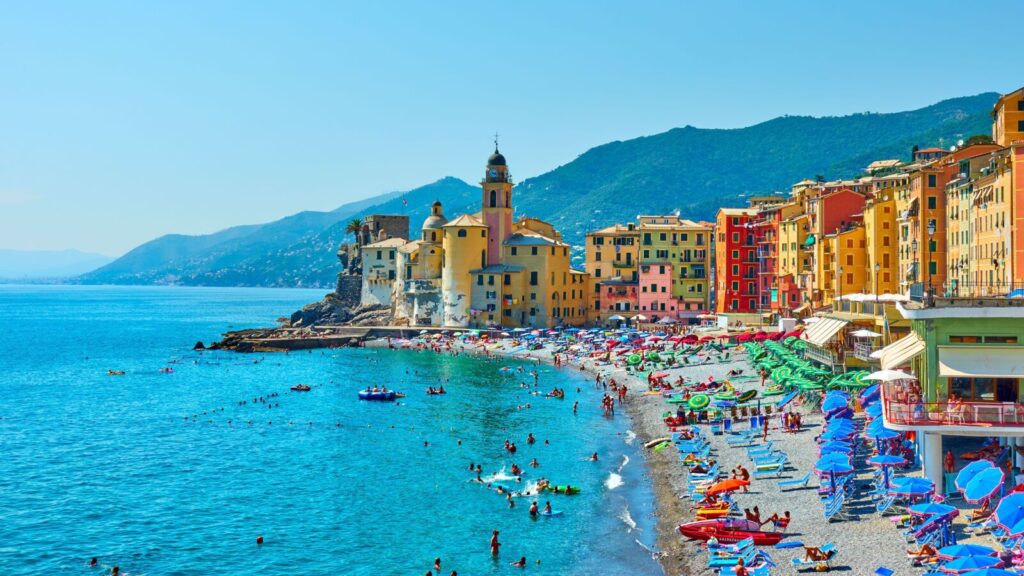
🌿 Connect on TelegramHere’s the insider move most tourists miss entirely. When the cities turn into ovens, Italians don’t suffer — they head to the mountains and the quiet coasts. If you want a cooler, cheaper, more authentic summer, point yourself at the parts of Italy the guidebooks skip.
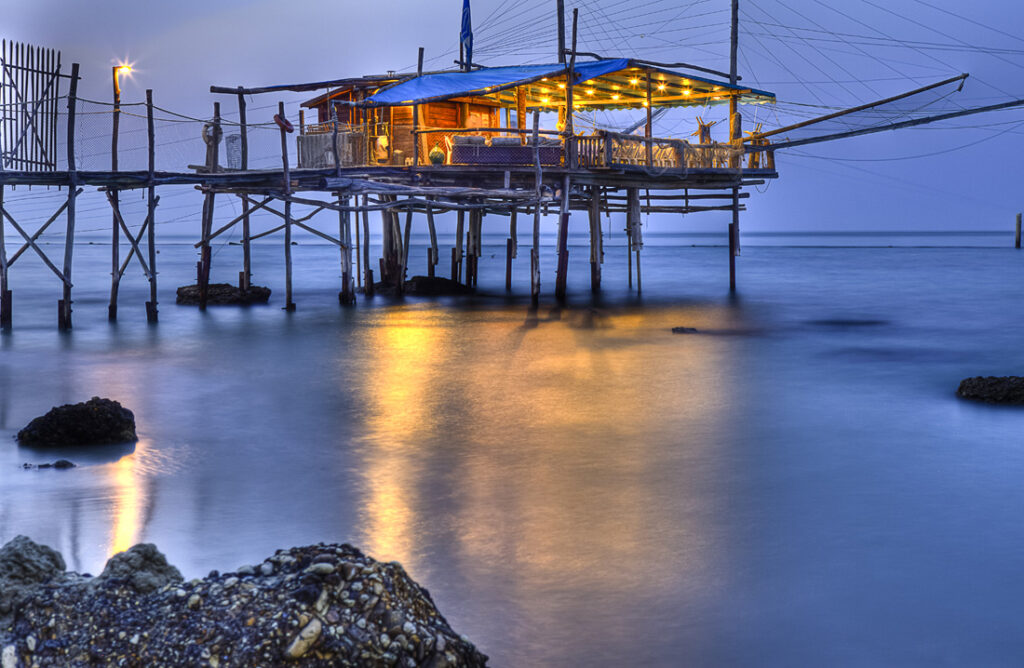
The Costa dei Trabocchi (Abruzzo) — Our top under-the-radar pick. This stretch of the Adriatic coast south of Pescara is named for the trabocchi: centuries-old wooden fishing platforms suspended over the sea on stilts, many now converted into atmospheric seafood restaurants. The real magic is the Via Verde, a flat, scenic cycle-and-walking path built on a former railway line that runs for roughly 42 km along the coast between Ortona and Vasto, part of the longer 130+ km “Bike to Coast” route. Rocky coves, Mediterranean scrub, sea breezes, and a fraction of the crowds (and prices) of Amalfi. You can even reach it via the seasonal “Treno dei Trabocchi.” It’s one of the most beautiful — and underrated — corners of the entire Italian coastline.
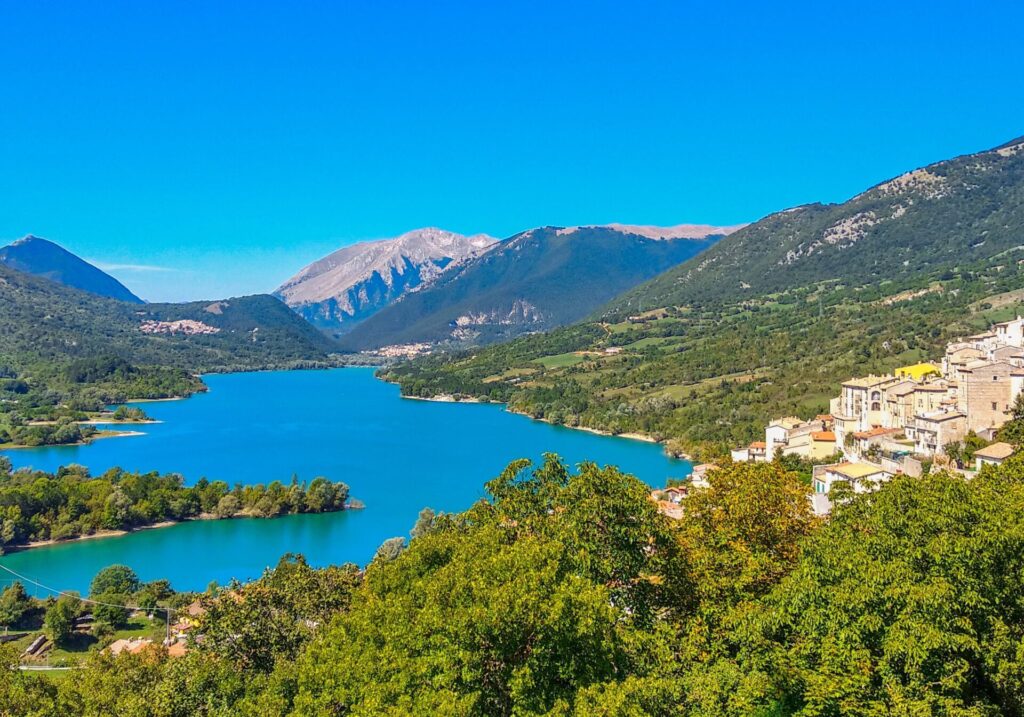
The Abruzzo mountains — Less than two hours from Rome, Abruzzo hides some of the highest, wildest terrain in peninsular Italy. The Gran Sasso massif and the Campo Imperatore plateau — nicknamed “Little Tibet” and sitting above 1,500m — offer genuinely cool air and surreal landscapes even in August. Mountain towns like Roccaraso (over 1,200m) transform from ski resorts into summer hiking and biking bases, and the fairy-tale stone villages of Santo Stefano di Sessanio, Rocca Calascio and lakeside Scanno feel like stepping back centuries. Three national parks (Gran Sasso, Majella and Abruzzo, Lazio e Molise) put nature, wolves and cool mountain air within easy reach.
Molise — Italy’s “invisible region,” so quiet that Italians joke it doesn’t exist. That’s exactly the point: empty beaches around Termoli, mountain villages, and the Abruzzo, Lazio e Molise National Park spilling over its borders. If you want to disappear from the tourist trail entirely while staying cool in the hills, Molise is your answer.
Basilicata — Best known for the cave city of Matera (Sassi di Matera), Basilicata’s interior is mountainous and far cooler than the baking south coast. The Lucanian Apennines and the Pollino National Park offer forested highlands and tiny hilltop villages where summer evenings actually require a light jacket. A genuinely off-grid choice for travelers who want the real, untouristed south.
A word to the wise on all of these southern and inland areas: they are beautiful precisely because they’re untouched — and that also means cannabis culture here is far more discreet and conservative than in the big cities. Southern regions in particular are best treated as zero-tolerance zones. Enjoy the landscape, the food and the cool air; keep everything else extremely low-key. If you want trustworthy, region-by-region local guidance for anywhere in Italy, this is exactly where a reliable contact matters most.
Cooler Italy: where locals hide from the heat
Stilt-fishing huts, sea breezes and the flat Via Verde cycle path — Amalfi vibes without the crowds.
“Little Tibet” above 1,500m — genuinely cool air and stone villages, under 2h from Rome.
Empty beaches, forested highlands and Matera’s caves. Italy’s untouristed, cooler heart.
Exploring these regions? Get local tips from Mister Brambilla →
Beat-the-heat essentials for every Italian city
A few rules that apply everywhere this summer:
- Hydrate relentlessly and carry a refillable bottle — Italy’s public fountains are your best friend.
- Embrace the riposo. Many shops and restaurants close from roughly 1–4pm. Don’t fight it; nap, eat slowly, or hide in an air-conditioned museum.
- Sunset is the magic hour. Plan your sightseeing and passeggiata for early morning and evening, when the cities come alive again.
- August = closures. Expect many local businesses to shut for part of the month, especially around Ferragosto.
For more practical groundwork before you arrive, our essential tips for tourists in Naples and the question on everyone’s mind — is Naples safe? — are worth a read.
Final word
Weed in Italy 2026: quick FAQ
Is weed legal in Italy in 2026?
No. Recreational use isn’t legal. Since Decree-Law 48/2025, hemp flower and flower-derived products are classified as narcotics regardless of THC. Personal possession is an administrative offense; selling is criminal.
Can I still buy “cannabis light”?
No. Hemp flower is no longer legally sold anywhere in Italy. Some CBD oils from seeds/stalks and CBD cosmetics persist in a gray zone, but the buds are gone.
How hot will summer 2026 be?
Hotter than average. A heat dome over Western Europe and a developing El Niño point to an intense season — Rome around 30–35°C in July, with inland cities like Florence among the hottest.
Where do I start in Naples?
Naples stays one of Italy’s most accessible cities, but post-2025 it’s all word of mouth and trusted contacts — not shops. Discretion is everything in the southern heat.
Naples tips from Pochoerbivoro →
What about the rest of Italy?
University and northern cities (Bologna, Turin, Milan’s Navigli) lean more liberal. Historic tourist centers are stricter, and the south is best treated as zero-tolerance. Off the tourist trail, local knowledge matters most.
All-Italy guidance from Mister Brambilla →
When do closures hit?
Around Ferragosto (Aug 15) many businesses close and locals head to the coast. Tourist centers stay open; residential areas can feel deserted. Plan around mid-August.
Summer 2026 is going to test everyone who visits Italy — but with the right timing, the right neighborhoods, and a healthy respect for both the sun and the law, it can still be the trip of a lifetime. Stay cool, stay smart, and as always: explore like a local, not like a tourist.
⚠️ A quick note on safety: cannabis carries real legal risk in Italy under the 2025 rules, and excessive heat is genuinely dangerous — heatstroke is not a joke. Look after yourself, know your limits, and enjoy responsibly.
⚠️ Disclaimer ⚠️ The information in this article is current as of May 2026 and is provided for informational purposes only. Laws, prices, opening hours and weather forecasts are subject to change. Always verify with official sources before traveling. This is not legal advice.
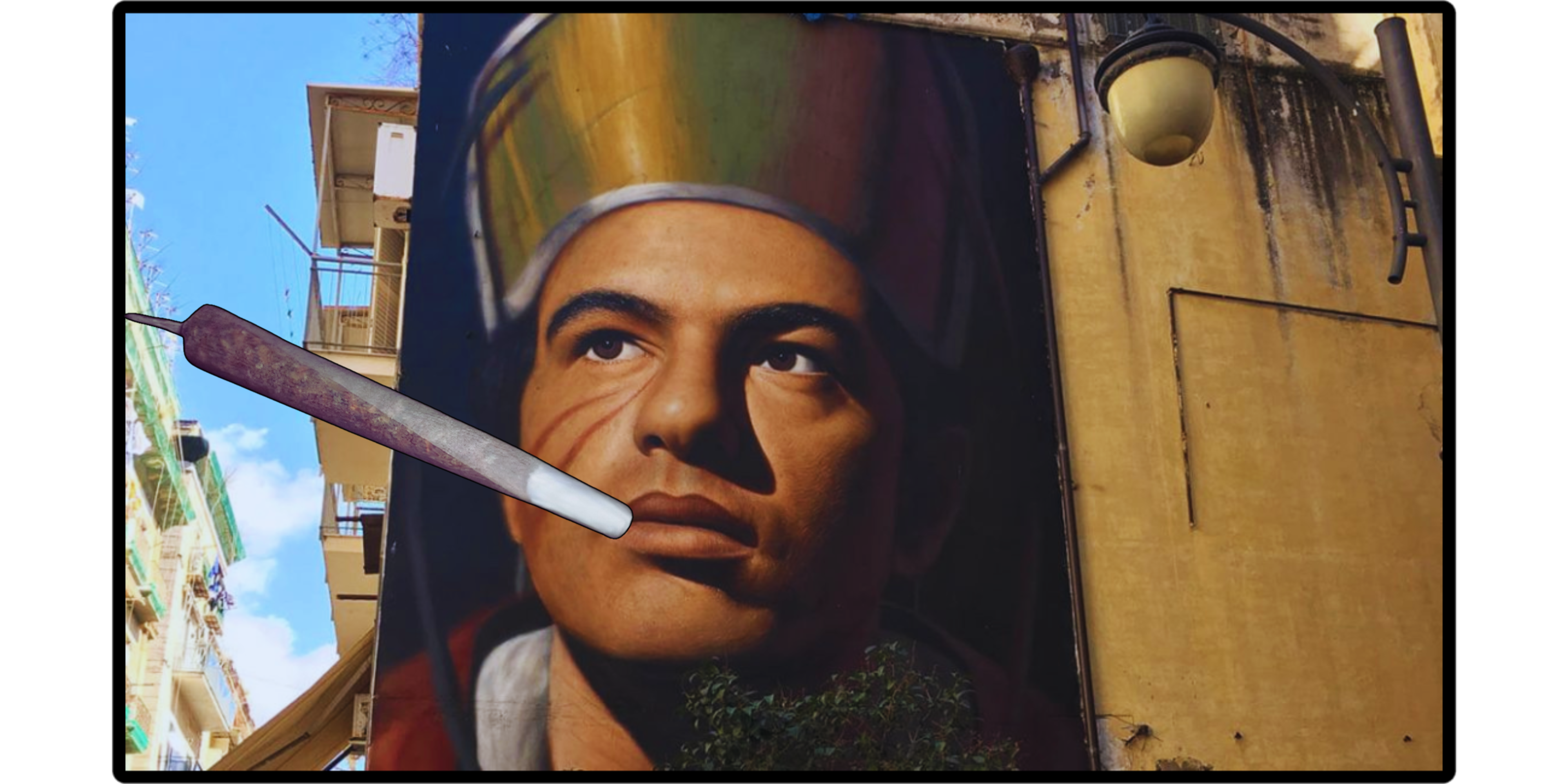
Complete Guide to Weed in Naples
Everything you need to know about finding and enjoying quality cannabis in Naples.
Read Guide →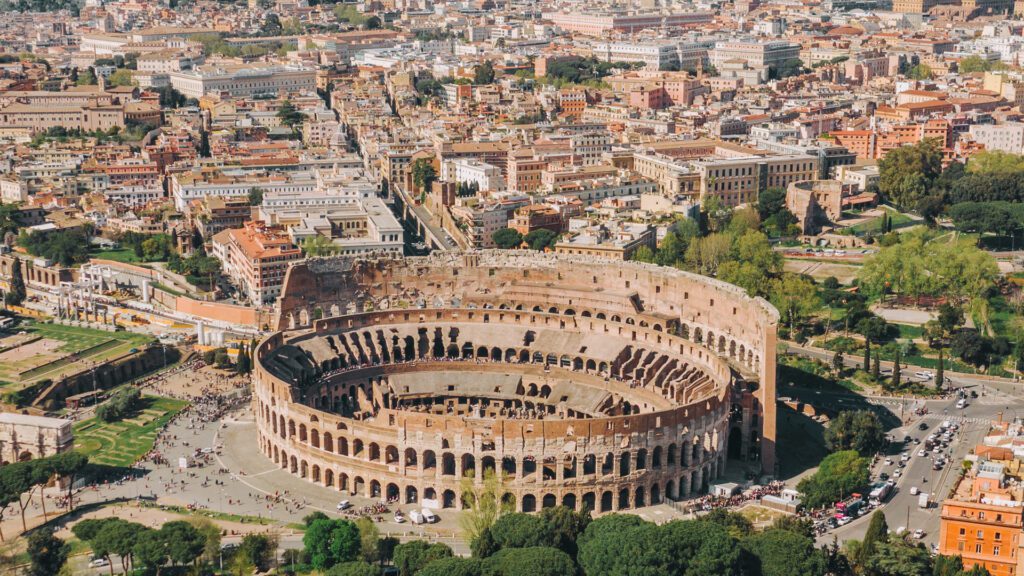
Finding Weed in Rome
Navigate Rome’s cannabis scene like a local with our insider tips.
Read Guide →
Cannabis Guide to Florence
Discover Florence’s hidden cannabis culture in the birthplace of Renaissance.
Read Guide →
Join Our Naples Insider Community
Get real-time advice, exclusive locations & connect with locals on Telegram

Leave a Reply