
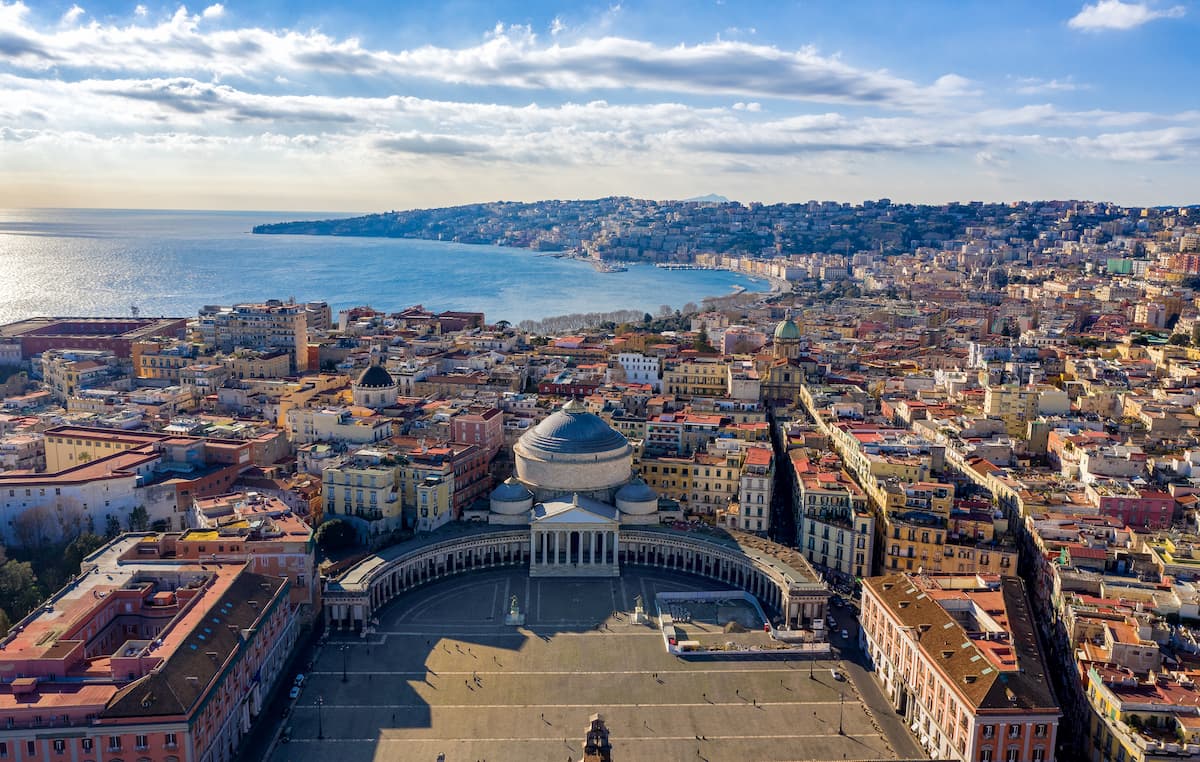
Remember that all our blog posts are hand-made by real locals, trying to help tourists and people living in Italy enjoy the most of everything
Look, let’s get real about Naples. If you’ve been googling about visiting this city, you’ve probably read some absolutely terrifying stuff. Pickpockets on every corner. Mafia lurking in the shadows. Scooters that’ll run you over. Scams everywhere. And honestly? We need to talk about this ridiculous gap between Naples’ reputation and Naples’ reality.
Welcome to what we call the “Naples Syndrome” – that hilarious phenomenon where tourists arrive in Naples absolutely terrified, clutching their bags like they’re carrying the Crown Jewels, and then spend their entire trip posting Instagram stories about how they’ve fallen in love with the city. By day three, they’re eating pizza with their hands in Quartieri Spagnoli, making friends with random nonnas, and wondering why anyone ever told them Naples was dangerous.
This is your complete, honest, no-BS guide to safety in Naples in 2026. We’re going to talk about the real risks (yes, they exist), the neighborhoods you should know about, the truth about weed in Naples, and why this city is probably about to become your favorite place in Italy.
Is Naples Italy Safe? (Quick Verdict 2026)
Yes, Naples is safe for tourists. Statistics from 2024-2025 show that Naples has a lower crime rate than Milan or Rome. While petty theft (pickpocketing) occurs in crowded areas, violent crime against travelers is extremely rare. With standard urban awareness, Naples is as safe as any other major European capital like London or Paris.
- ✅ Safe areas: Historic Center, Chiaia, Vomero, Lungomare.
- ⚠️ Use caution: Piazza Garibaldi (Station) at night.
- 🚫 Areas to avoid: Scampìa, Secondigliano (No tourist interest).
Is Naples Safe? Understanding the Naples Syndrome
The “Naples Syndrome”
It’s that moment of pure realization when the fear you felt before coming here turns into a deep, obsessive love for the city. You expected Gomorrah, but you found a masterpiece of human energy and beauty. If you find yourself already planning your return trip on day three, you’ve got it.
The “Naples Syndrome” is basically the travel version of judging a book by its cover, except the book turns out to be way better than the cover suggested. Here’s how it typically goes:
Before Your Trip: You’re reading travel forums at 2 AM, convinced you’re going to get mugged the second you step off the train. Your friends are sending you those dramatic articles about how Naples is “Italy’s most dangerous city.” You’re planning to wear your money belt under three layers of clothing. Maybe you’re even reconsidering the whole trip.
Day 1: You arrive at the Central Station. It’s chaotic. There are street vendors everywhere. Someone tries to help you with your bag (you panic). The traffic is absolute madness. You think, “Oh no, they were right.”
Day 2: You’ve had the best pizza of your life. A local restaurant owner gave you free limoncello. You discovered a beautiful church that isn’t even in your guidebook. The historic center is stunning. Wait, is Naples actually… amazing?
Day 3 onwards: You’re already planning your return trip. You’re texting friends back home telling them to ignore everything they’ve read. You’re eating street food without a second thought. You’ve realized that Naples isn’t dangerous – it’s just unapologetically itself.
Sound familiar? Yeah, that’s the syndrome. And according to recent data from the Italian Ministry of Tourism, Naples is experiencing record-breaking tourism numbers precisely because word is getting out: this city is special.
Is Naples Italy Safe? The Crime Statistics vs. Reputation
The Numbers Don’t Lie: Crime Rates in Italy
Total reported crimes per 100,000 inhabitants (Latest Official Data)
Alright, let’s cut through the nonsense with some actual facts. Naples is Italy’s third-largest city with over 1 million people (3 million in the greater metropolitan area). It’s a real, working city – not a museum like some other Italian destinations we could mention.
According to 2024 statistics from the Italian Interior Ministry, tourist-targeted crime in Naples has actually decreased by about 18% over the past five years. Violent crime against tourists is extremely rare. Like, “you’re more likely to get hit by a falling coconut” rare.
What does exist? Petty theft. Pickpocketing. The occasional scam. You know, the same stuff that happens in Barcelona, Paris, Rome, or any major tourist city. The difference is Naples doesn’t try to pretend it’s something it’s not.
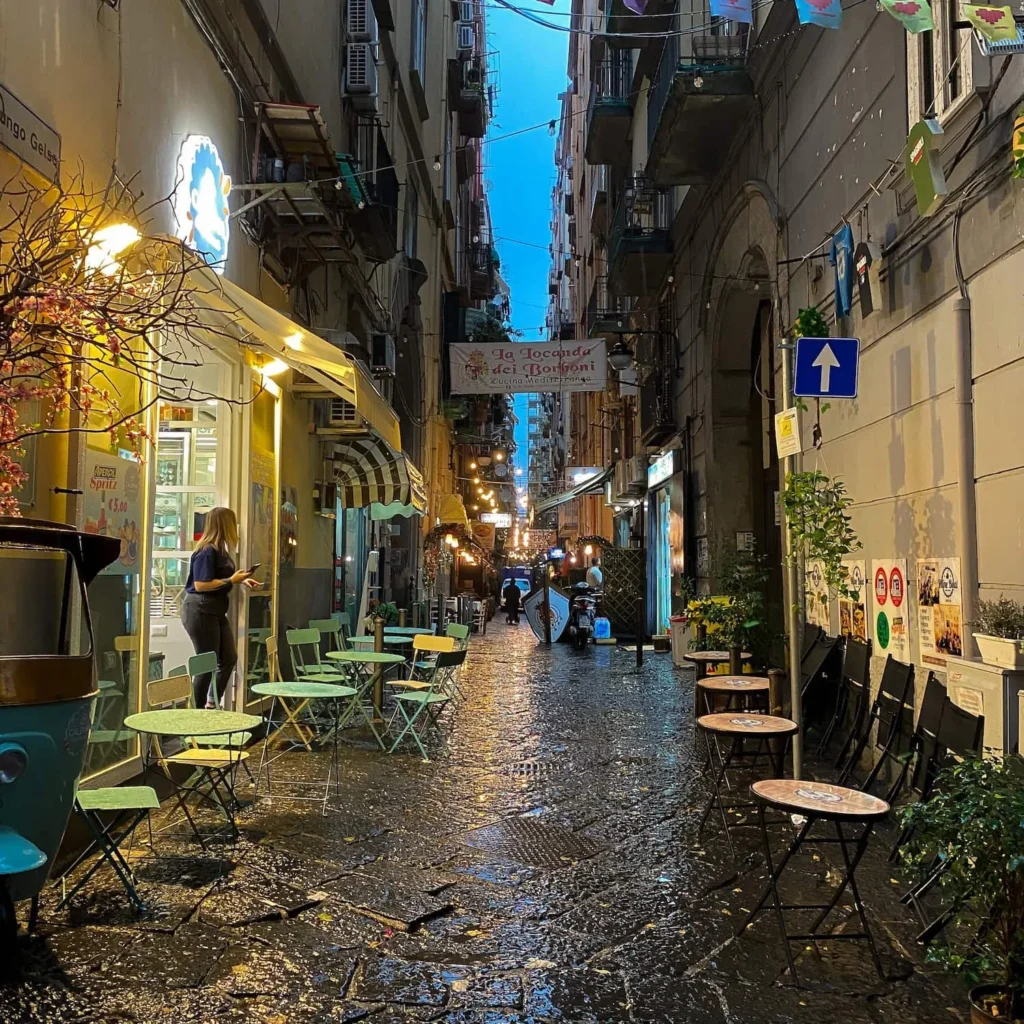
Here’s what Italia.it data shows about tourist satisfaction: Naples consistently ranks in the top 5 Italian destinations for “exceeded expectations,” with over 89% of visitors rating their experience as “better than anticipated.” That’s the Naples Syndrome in statistical form, folks.
The city has invested heavily in tourism infrastructure. According to recent reports from the Naples municipality, there are now more police patrols in tourist areas, improved lighting in previously dark streets, and better signage in multiple languages. The transformation of neighborhoods like Quartieri Spagnoli from sketchy to trendy is evidence of real, positive change.
Naples Dangerous Neighborhoods: Where to go and what to avoid
| District | Safety Level | The Vibe |
|---|---|---|
| Historic Center | ✅ Safe | Pure energy, crowded, very safe day & night. |
| Chiaia / Vomero | 💎 Top Tier | Upscale, elegant, perfectly safe. |
| Quartieri Spagnoli | 🟡 Good | Trendy & safe on main streets; use sense in deep alleys. |
| Piazza Garibaldi | 🟠 Watch Out | Messy & chaotic. Keep your bags close. |
Let’s talk about where you’ll actually be spending your time and what you need to know. Unlike those generic travel guides, we’re going to give you the real local perspective on each area.
The Historic Center (Centro Storico)
This is where the magic happens. The largest historic center in Europe, a UNESCO World Heritage site, and honestly where you’ll spend most of your time. Narrow streets, incredible churches, hidden gems around every corner, and street food that’ll ruin all other street food for you forever.
Safety level: Very good, especially during the day. At night, it’s still generally safe but stick to busier streets. The only real issue is keeping track of your belongings in crowded areas. Pickpockets love crowds, so just be aware.
The streets around Spaccanapoli, Via dei Tribunali, and Piazza San Domenico Maggiore are bustling until late at night. There’s safety in numbers, and these areas are basically always packed with both locals and tourists. If you want to understand how to move around the historic center, walking is honestly your best bet. The streets are too narrow for most vehicles anyway.
Chiaia: The Fancy District
Chiaia is where Naples puts on its designer sunglasses. This is the upscale neighborhood with high-end shopping, elegant cafes, and people who actually iron their clothes. It’s safe, clean, and honestly a bit… boring? But if you want to feel like you’re in Milan while technically being in Naples, this is your spot.
Safety level: Excellent. Probably the safest neighborhood in Naples. Also probably where you’ll spend the most money on an espresso.
Vomero: The Hill with a View
Take the funicular up to Vomero and you’ll find a more residential, relaxed Naples. Great views of the bay, Castel Sant’Elmo, and the Certosa di San Martino. It’s where actual Neapolitans live normal lives away from the tourist chaos.
Safety level: Very good. It’s a residential area, so it has that neighborhood watch vibe. Plus, those funiculars are kind of an adventure in themselves.
Quartieri Spagnoli: The Plot Twist
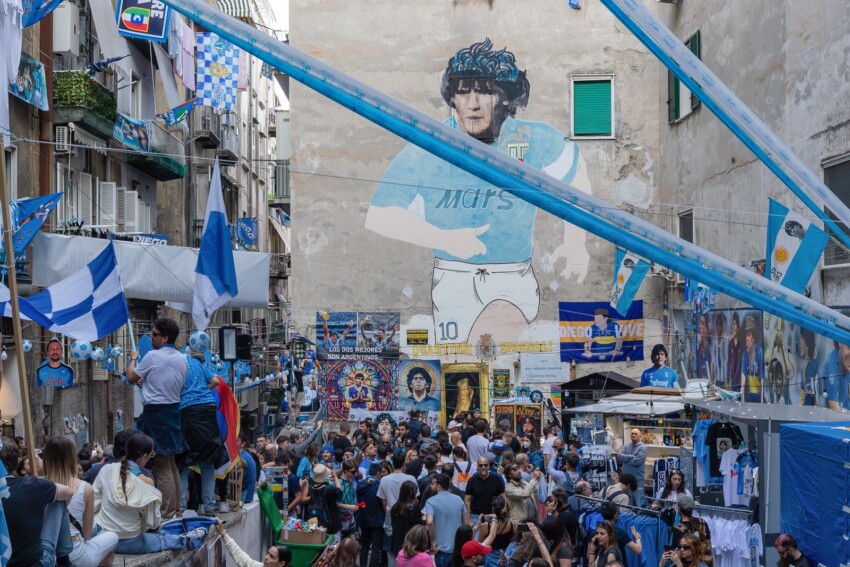
Oh boy, here’s where it gets interesting. Quartieri Spagnoli used to be the neighborhood your guidebook told you to avoid at all costs. Now? It’s one of the coolest areas in Naples. Street art everywhere, authentic trattorias, and that raw, unfiltered Naples energy everyone talks about.
Safety level: Generally safe on main streets like Via Toledo and the areas closest to it. The deeper you go into those narrow alleys, the more you should use common sense. During the day? Totally fine. Late at night in the deep alleys? Maybe not the best idea, especially if you’re alone.
The transformation of Quartieri Spagnoli is actually one of Naples’ biggest success stories. According to local tourism data, it’s now one of the most visited neighborhoods by international tourists. That said, don’t be stupid – this isn’t Disneyland. Respect the neighborhood, don’t flash valuables, and you’ll be fine.
Piazza Garibaldi and Central Station Area
Let’s be honest: this area is rough around the edges. It’s not dangerous, but it is overwhelming, especially if it’s your first time in Naples. The Central Station area is super busy, chaotic, multicultural, and sometimes sketchy-feeling. There are daily street markets (totally legal), tons of vendors, and yes, some people who might try to scam tourists.
Safety level: Medium. Not dangerous, but requires street smarts. Keep your bags close, don’t engage with random people offering to help with luggage, and move with purpose.
The African market near the station is actually really cool if you’re interested in that kind of thing – you’ll find products and food you won’t see anywhere else in Italy. But again, this isn’t the best first impression of Naples, so don’t judge the whole city by this area.
If you’re arriving by train, just grab your stuff and get out of the area. Head to the metro or grab a legitimate taxi (white, with a meter) and get to your accommodation. You can explore this area later if you want, but it’s not where you should be hanging out.
Scampìa and Secondigliano: The Actually Sketchy Areas
Okay, so these neighborhoods in northern Naples have legitimate problems. They’re known for Camorra activity (Naples’ version of the mafia), social issues, and yeah, you probably shouldn’t go there as a tourist. Not because you’ll definitely get mugged, but because there’s literally nothing there for tourists anyway.
Safety level: Low. But also irrelevant because you have zero reason to go there.
These areas are far from any tourist attractions, so unless you’re deliberately trying to visit, you won’t accidentally end up there. If anyone tells you to go to Scampìa for “authentic Naples,” they’re either joking or they don’t like you.
The Real Talk About Weed in Naples

Finding Quality Weed in Naples?
Join our private Telegram community for verified locations, real-time safety updates, and direct connections with trusted local experts.
Connect with Naples ExpertsSince we’re being honest about everything else, let’s talk about cannabis. This is Italy Weed Map after all, and many of you probably googled “weed in Naples” before ending up here.
The Legal Situation (January 2026)
Here’s the deal: recreational cannabis is illegal in Italy. Period. And if you think Naples is somehow more relaxed about this than the rest of Italy, you’re wrong. In fact, the April 2025 Security Decree made things even stricter by banning CBD flower products that were previously in a legal gray area.
Possession of any amount can result in fines, license suspension, and confiscation of your passport. Yes, even small amounts. Yes, even if you’re a tourist. According to Italian law, the penalties are administrative rather than criminal for small amounts, but that doesn’t mean “no big deal.” It means paperwork, fines, and a ruined vacation.
The Street Reality
Finding Quality Weed in Naples?
Join our private Telegram community for verified locations, real-time safety updates, and direct connections with trusted local experts.
Connect with Naples ExpertsDespite the laws, you’ll occasionally smell weed in certain neighborhoods. Young Neapolitans smoke, just like young people everywhere. But here’s what you need to understand: what locals might get away with and what tourists will get away with are two very different things.
The biggest danger isn’t even the legal stuff – it’s the scams. Around Piazza Garibaldi, Piazza Dante, and other tourist hotspots, there are people who approach foreigners offering to sell cannabis. The success rate of these transactions being legitimate? About 1%. Seriously. We’ve heard every story: fake weed, oregano, occasionally actual weed but terrible quality, people taking money and disappearing, and even setups where the “dealer” is working with people who then rob you.
We’ve written an entire guide about avoiding these scams, but the short version is: do not buy from street dealers. Ever. It’s not worth it.
What About Connecting with Locals?
Authentic Experiences from Our Cannabis Community
Real feedback from travelers who explored Naples with our guidance
“This stuff is fucking amazing”

“This gentleman is super legit. I was able to meet with him the next day. Doing gods work”

“I am back home now but I wanted to thank you! It’s nice to meet a honest person across the world! I will message you the next time I am back”
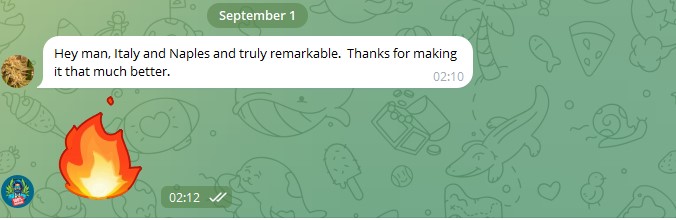
“Hey man, Italy and Naples are truly remarkable. Thanks for making it that much better”

“Thank you my friend! Smooth and safe and excellent quality! Could not ask for better visiting Napoli”
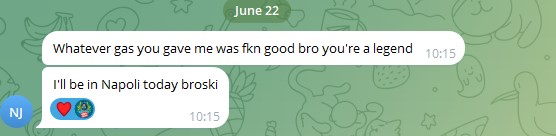
“Whatever gas you gave me was fkn good bro you’re a legend”
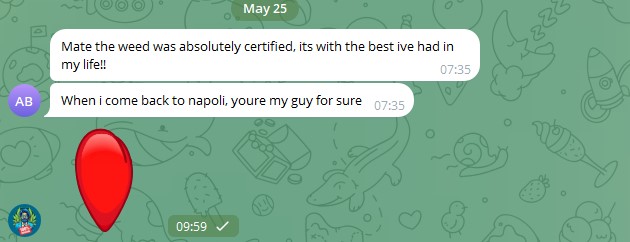
“Mate the weed was absolutely certified, its with the best ive had in my life. When I come back in Napoli you’re my guy for sure”
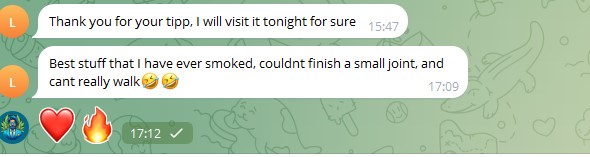
“Best stuff i’ve ever smoked, couldn’t finish a small joint and can’t really walk XD XD XD”
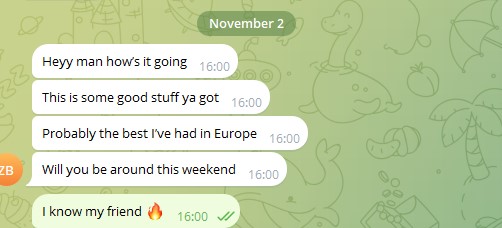
“This is some good stuff ya got. Probably the best i’ve had in Europe”

“Lovely man, lovely green, very happy and felt totally safe”
Look, we’re not going to pretend that cannabis culture doesn’t exist in Naples. It does. Just like in Rome, Florence, Milan, and every other Italian city, there are communities of people who enjoy cannabis despite its illegal status.
The difference between tourists getting scammed and tourists actually connecting with this community is simple: actual relationships with actual locals. Not transactions with street dealers. Not sketchy apps. Not following random people into alleys.
If cannabis culture is important to your travel experience, invest time in building genuine connections. Join local social scenes. Be patient. Be respectful. Understand that Italians are generally cautious about cannabis due to the legal situation, and they’re not going to trust random tourists immediately.
The Bottom Line on Cannabis in Naples
Our honest advice? If weed is essential to your trip, maybe reconsider Naples. Or at least lower your expectations significantly. The risks – legal, financial, and personal safety – are substantial. The reward? At best, mediocre weed at inflated prices with constant paranoia about getting caught.
That said, if you’re here for a while and genuinely want to understand the local scene rather than just score, that’s different. But it requires patience, discretion, and building real relationships. For more detailed info about cannabis laws in Naples, we’ve got a whole article breaking down the legal specifics.
Transportation: Navigating the Beautiful Chaos
Practical Safety Tools
- Emergency: 112 (European standard)
- Taxi: GoXGO App or 081 8888
- Safety Tip: Keep a digital copy of your passport on your phone and leave the original in the hotel safe.
Naples’ transportation system is… an experience. It works, sort of, but it requires patience and a sense of humor.
The Metro
The metro is actually pretty decent. Line 1 is your friend – it connects the Central Station to Vomero and beyond, and several stations are genuinely beautiful with contemporary art installations. Stations like Toledo, Università, and Municipio are basically underground art galleries. According to Unicocampania, the metro runs frequently and is generally reliable.
Line 2 is useful for reaching Pozzuoli and the Phlegraean Fields if you’re doing day trips.
Safety on the metro: Generally fine, but watch your belongings during rush hour. Pickpockets love crowded metro cars. Keep your bag in front of you, and you’ll be okay.
Buses and Trams
Buses in Naples are… optimistic. The schedules exist more as suggestions than actual commitments. Between Naples’ legendary traffic (seriously, Rome might have it worse but not by much) and the general chaos, buses can be anywhere from on time to “who knows when.”
That said, they’re cheap and will eventually get you where you need to go. Download the ANM app for real-time updates, but don’t trust it completely. This is Naples – sometimes you just have to go with the flow.
Funiculars
The funiculars are fantastic. They’re basically cable railways that take you up to Vomero from various points in the lower city. They’re reliable, scenic, and feel very old-school European. Plus, they’re included in your regular transit ticket.
Taxis and Ride-Sharing
Taxis in Naples have a mixed reputation. The legitimate white taxis with meters are fine. The issue is knowing you’re getting a legitimate taxi. Always ensure:
- The taxi is white
- It has an official taxi sign on top
- The meter is running
- They start the meter at the beginning of the trip
Uber exists but with limited availability. Compared to Rome or Milan, ride-sharing is less common in Naples.
Walking
Honestly? Walking is the best way to experience Naples, especially the historic center. According to official tourism data, the centro storico is compact enough that you can walk from one end to the other in about 30 minutes. Plus, the streets are so narrow that walking is often faster than any other option.
Just remember: Neapolitan drivers are… aggressive. Cross at designated crossings when possible, and even then, make eye contact with drivers and move with confidence. Hesitation is more dangerous than decisive movement.
Food: Where Eating Badly Is Nearly Impossible
Let’s talk about why you’re really here. Naples is the birthplace of pizza, and yes, every cliché about Neapolitan pizza is true. The crust. The simplicity. The buffalo mozzarella. The fact that after eating here, pizza anywhere else feels like a personal insult.
Pizza
Da Michele and Sorbillo are famous for a reason, but honestly, even random pizzerias in residential neighborhoods serve pizza that would be considered exceptional anywhere else in the world. The secret? Neapolitans take pizza seriously. Like, “family honor depends on it” seriously.
A margherita pizza costs around €5-7. A marinara (no cheese, just tomato, garlic, and oregano) is even cheaper. And yes, it’s totally acceptable to eat pizza with your hands. Folding it is the traditional way.
Street Food
Naples’ street food game is legendary:
- Pizza fritta: Fried pizza. It’s as amazing as it sounds.
- Cuoppo: A paper cone filled with fried seafood or vegetables
- Sfogliatella: A shell-shaped pastry filled with ricotta
- Pastiera: A traditional pie with ricotta and wheat
You’ll find these at small shops and street vendors throughout the city. Don’t be afraid to eat from places that look local rather than touristy.
Coffee Culture
Neapolitan coffee culture is a whole thing. Espresso is consumed standing at the bar, quickly, often followed by a small glass of water. The coffee is strong, rich, and perfect. Ordering a cappuccino after 11 AM will get you judged, but they’ll still make it for you. For more on Italian food culture, we’ve got you covered.
Where to Eat
Skip the restaurants right next to major tourist attractions – they’re overpriced and mediocre. Walk a few blocks into actual neighborhoods. If you see mostly locals eating somewhere, that’s your spot. According to Slow Food, Naples has more traditional trattorias per capita than almost any other Italian city.
Quartieri Spagnoli, Sanità, and the smaller streets of the centro storico have the best food-to-tourist ratio. Places where menus aren’t in four languages and where nonna might actually be in the kitchen.
What to See: Beyond the Tourist Traps
Naples has so much to see that it’s almost overwhelming. Let’s break it down:
The Absolute Must-Sees
The Historic Center: Just walk. Get lost. You’ll stumble upon incredible churches, hidden courtyards, and that distinctive Naples energy. It’s the largest historic center in Europe for a reason.
Naples National Archaeological Museum: One of the world’s best collections of Greco-Roman artifacts. All the good stuff from Pompeii and Herculaneum ends up here. Skip the crowds at the actual ruins and see the treasures in air-conditioned comfort.
Cappella Sansevero: Home to the Veiled Christ sculpture, which is genuinely incredible. It’s a small chapel, so book ahead because there’s a limit on visitors.
Naples Underground (Napoli Sotterranea): The city beneath the city. Greek and Roman tunnels, aqueducts, and even WWII bomb shelters. It’s weird and fascinating.
Day Trips
Pompeii: Obvious but essential. Take the Circumvesuviana train from Naples (about 40 minutes). Get there early to avoid crowds. Consider hiring a guide or at least downloading an audio guide app.
Mount Vesuvius: You can hike up the volcano that buried Pompeii. The views are spectacular. According to Vesuvius National Park, you can take a bus from Pompeii to the parking area, then it’s about a 30-minute hike to the crater.
Amalfi Coast: While you’re in the area, the Amalfi Coast is stunning. Positano, Amalfi, and Ravello are all accessible via bus or ferry from Naples. Understanding the local scene in these coastal towns is a whole different experience.
Capri: The ferry from Naples takes about an hour. Yes, it’s touristy. Yes, it’s expensive. Yes, it’s worth it at least once.
The Hidden Gems
The Sanità neighborhood is undergoing a major renaissance. Less touristy than the historic center but equally fascinating. The Catacombs of San Gennaro are here, and they’re genuinely interesting rather than creepy.
Palazzo Reale and the Teatro di San Carlo showcase Naples’ royal past. The Royal Palace is less crowded than the historic center but equally impressive.
For more hidden gems in Naples, we’ve written an entire guide to the places most tourists miss.
The People: Naples’ Greatest Asset
Here’s what makes Naples special: the people. Neapolitans are loud, passionate, opinionated, and incredibly warm once they accept you. The city has a sense of community that feels rare in modern Europe.
Street life is everything here. People actually know their neighbors. Shopkeepers remember regular customers. Life happens in the streets and piazzas rather than behind closed doors. This openness is both what makes Naples feel authentic and what can overwhelm visitors used to more reserved cultures.
Learn a few basic Italian phrases. “Buongiorno,” “grazie,” “per favore” – these go a long way. Neapolitans appreciate effort, even if your pronunciation is terrible. They’ll probably correct you, laugh with you, and then help you order the best thing on the menu.
The culture is different from northern Italy. Naples is louder, messier, more chaotic, and way more genuine. Milan feels corporate by comparison. Rome feels like it’s performing for tourists. Naples just… is.
Practical Safety Tips: The Actually Useful Stuff
Alright, enough philosophy. Here’s the practical stuff you actually need to know:
For Your Belongings:
- Use a crossbody bag, not a backpack in crowded areas
- Keep your phone in a secure pocket, not your back pocket
- Don’t put anything valuable in outside pockets
- Hotel safes exist for a reason – use them for passports and extra cash
- Photocopy your important documents and keep them separate from the originals
For Transportation:
- Validate your transit tickets or face significant fines
- Don’t accept “help” with buying tickets from random people
- Keep bags in front of you on crowded metros and buses
- Use official taxi stands or have your hotel call you a taxi
- For driving in Italy, be aware of ZTL zones and traffic restrictions
For Interactions:
- If something feels wrong, trust your instincts
- Don’t engage with persistent street vendors
- Ignore people who tell you something is “closed” and offer alternatives
- Be wary of anyone approaching you with unsolicited help
- Common scams in Italy happen here too
For Emergencies:
- Emergency number in Italy: 112 (works for everything)
- Your embassy’s emergency contact should be in your phone
- Travel insurance isn’t optional – get it
- There are English-speaking doctors in Naples; your hotel can recommend one
For Street Smarts:
- Walk like you know where you’re going, even if you don’t
- Don’t stop in the middle of busy streets to check your phone or map
- Be aware of your surroundings, especially in crowded areas
- Poorly lit alleys at night aren’t great anywhere, including here
- Solo travelers: stick to busier areas at night
When to Visit: Timing Matters
Best times: Spring (April-May) and fall (September-October). The weather is perfect, and there are fewer tourists than summer. According to Italian tourism statistics, these are peak satisfaction months for visitors.
Summer: Hot and crowded. Like, really hot. July and August can hit 35°C (95°F) with humidity. That said, summer also has the best festivals and nightlife.
Winter: Surprisingly pleasant. November through March is less crowded and accommodation is cheaper. Some coastal attractions reduce service, but the city itself is fully operational. Plus, Christmas in Naples is a whole experience with nativity scenes everywhere.
Special Events: Major festivals include San Gennaro in May and September (the city’s patron saint), Napoli Pizza Village in summer, and various cultural events throughout the year.
Accommodation: Where to Stay
Book early. Naples’ tourism boom means that quality accommodation in convenient areas fills up fast and prices have increased significantly. This isn’t 2019 anymore – affordable hotels in the historic center are hard to find, especially during peak season.
Best areas for tourists:
- Historic center: Convenient but can be noisy
- Chiaia: Quieter, more upscale
- Vomero: Residential feel with great views
- Near the waterfront (Mergellina area): Beautiful but farther from attractions
Avoid:
- Right around Central Station unless you’re catching an early train
- Hotels that seem suspiciously cheap – there’s usually a reason
- Anywhere described as “up and coming” without checking reviews
Use major booking platforms and read recent reviews. Scam accommodations exist, so verify that places are legitimate before paying.
The Verdict: Is Naples Actually Safe?
Yes. With an asterisk.
Naples is safe for tourists who exercise normal urban awareness. It’s not a war zone. It’s not particularly dangerous. The dramatic warnings you’ve read are mostly outdated, exaggerated, or written by people who never actually spent time here.
Is it safer than Amsterdam? No. Is it more dangerous than Barcelona? Also no. It’s a major European city with the same issues all major cities have, plus a reputation problem that makes everything seem worse than it is.
The biggest threat to your Naples trip isn’t crime – it’s missing out because you were too scared to actually experience the city. The second biggest threat is probably eating too much pizza and needing to buy new pants.
Comparing Naples to Other Italian Cities
Since you’re probably visiting other Italian cities, let’s put this in context. Comparing Rome and Naples is like comparing a museum to a living room. Rome is impressive but sanitized. Naples is messy but authentic.
Florence is beautiful but overrun with tourists and feels like an outdoor mall. Venice is sinking under the weight of cruise ship tourism. Milan is businesslike and expensive.
Naples? Naples is real. It’s where actual Italians live actual lives. And yes, sometimes that’s chaotic and overwhelming. But it’s also what makes it special.
For those planning a bigger Italy trip, our guide to the best cities worth visiting in Italy can help you plan your route.
Final Thoughts: Embrace the Chaos
Look, Naples isn’t for everyone. If you need everything to be organized, clean, and predictable, you’re going to have a hard time here. If you can roll with chaos, appreciate authenticity over polish, and want to see Italy without the Instagram filter, Naples is incredible.
The “Naples Syndrome” is real because the city overdelivers on expectations in ways that matter. You came for pizza and baroque churches. You’re leaving with stories about the nonna who invited you into her house for coffee, the random street musician who played just for you, the sunset over Vesuvius that made you cry a little.
Is it safe? Yes, if you’re not an idiot. Will you fall in love with it? Probably. Will you want to come back? Almost certainly.
Stay aware, keep your belongings secure, use common sense, and then let Naples be Naples. The chaos is part of the charm. The imperfection is what makes it perfect.
And hey, if you need more real-time advice from people who actually live here, connect with locals who can give you the insider perspective on everything from where to eat to how to navigate the city like you belong here.
Frequently Asked Questions
Is Naples really dangerous for tourists in 2026?
No, Naples is not particularly dangerous for tourists. While petty theft exists (like in any major city), violent crime against tourists is extremely rare. Recent statistics show tourist-targeted crime has decreased by 18% over the past five years. The city’s scary reputation is largely outdated. Exercise normal urban awareness – secure your belongings, stay alert in crowded areas, avoid poorly lit alleys at night – and you’ll be fine. Most visitors experience zero problems and rate Naples among their favorite Italian destinations.
What is the “Naples Syndrome”?
The “Naples Syndrome” describes the common phenomenon where tourists arrive in Naples terrified due to its reputation, only to fall in love with the city within days. It’s characterized by pre-trip anxiety followed by post-visit obsession. Most visitors end up rating Naples as exceeding their expectations, with many calling it their favorite Italian city. The syndrome exists because Naples’ authentic, chaotic charm doesn’t translate well to online reviews and travel warnings, but the real experience is overwhelmingly positive.
Are Quartieri Spagnoli safe to visit now?
Yes, Quartieri Spagnoli has transformed significantly and is now one of Naples’ coolest neighborhoods. The main streets near Via Toledo are generally safe and full of great restaurants and street art. However, use common sense – the deeper narrow alleys are best avoided late at night, especially if you’re alone. During the day, the area is busy with both locals and tourists. The neighborhood’s transformation from sketchy to trendy is one of Naples’ biggest recent success stories, but it’s still a working-class area, not Disneyland.
What’s the truth about buying weed in Naples?
Recreational cannabis is illegal in Italy, and the April 2025 Security Decree made laws stricter by banning previously legal CBD flowers. Possession can result in fines, license suspension, and passport confiscation. Street dealers around tourist areas are scams 99% of the time – you’ll get fake weed, oregano, or robbed. Police can be unpredictable in enforcement, and tourists face more serious consequences than locals. If cannabis is essential to your trip, honestly consider other destinations. If you’re curious about local cannabis culture, building genuine relationships with locals over time is the only legitimate approach.
Should I avoid the Central Station area?
The Central Station (Piazza Garibaldi) area isn’t dangerous, but it is overwhelming and chaotic. There are street markets, aggressive vendors, and occasional scam attempts. Keep your belongings secure, don’t engage with people offering unsolicited help, and move with purpose. Don’t judge all of Naples by this area – it’s not representative of the city. Once you reach your accommodation or the historic center, the vibe completely changes. Many visitors have bad first impressions due to the station area, but it gets way better quickly.
How does Naples compare to Rome in terms of safety?
Naples and Rome have similar safety profiles for tourists. Both cities deal with pickpocketing and scams in tourist areas. Rome might have slightly more organized crime targeting tourists due to higher visitor numbers, while Naples has a rougher reputation that isn’t entirely deserved. Neither city is particularly dangerous. The main difference is that Rome feels more tourist-ready and polished, while Naples is more authentically chaotic. If you can handle Rome’s crowds and chaos, you can absolutely handle Naples.
What are the actual must-see attractions in Naples?
The historic center (largest in Europe, UNESCO site) is essential – just walk and get lost. Naples National Archaeological Museum has the best Greco-Roman collection worldwide. Cappella Sansevero’s Veiled Christ sculpture is breathtaking. Underground Naples reveals the city beneath the city. Day trips to Pompeii and Mount Vesuvius are non-negotiable. The pizza scene deserves its own day. The Sanità neighborhood and its catacombs offer authentic experiences away from tourist crowds. Honestly, just wandering the streets is an attraction itself.
What’s the best way to get around Naples?
Walking is best for the historic center – streets are too narrow for vehicles anyway and everything is close together. Metro Line 1 is reliable and connects major areas, with beautiful art installations in several stations. Buses exist but are unreliable due to traffic. Funiculars are great for reaching Vomero. Official white taxis with meters are fine, but ensure the meter is running. The city’s traffic is chaotic, so driving is not recommended unless you’re leaving the city entirely.
When is the best time to visit Naples to avoid crowds?
April-May and September-October offer ideal weather with fewer tourists than summer. Temperatures are comfortable (20-25°C), and accommodation is more available and affordable than peak summer. Summer (June-August) is hot, humid, and very crowded, especially August. Winter (November-March) is surprisingly pleasant with the fewest tourists and cheapest prices, though some coastal attractions reduce services. Christmas season is special with nativity scenes throughout the city. Book accommodation early regardless of season – quality options in convenient areas fill quickly.
Where can I find authentic Neapolitan food away from tourist traps?
Skip restaurants directly next to major attractions – they’re overpriced and mediocre. Walk into actual neighborhoods like Quartieri Spagnoli, Sanità, or smaller streets in the centro storico. Look for places where locals eat, where menus aren’t in four languages, and where nonna might actually be cooking. Even random neighborhood pizzerias serve extraordinary pizza. For street food, find small shops rather than tourist-facing stands. If you smell something amazing coming from a tiny doorway and see locals lined up, that’s where you want to be.
Looking for more insider tips and real-time advice about Naples? Connect with local experts who live here and can answer your specific questions about navigating the city, finding authentic experiences, and making the most of your visit.

Leave a Reply