
Remember that all our blog posts are hand-made by real locals, trying to help tourists and people living in Italy enjoy the most of everything
Quick Navigation
Amalfi Coast in Spring: Beat the Crowds (April-May 2025)
The Amalfi Coast in spring is, quite simply, magical. While most tourists flood this legendary stretch of Italian coastline during the sweltering summer months, savvy travelers know that April and May offer something far more precious: the chance to experience one of the world’s most beautiful destinations without fighting through crowds, sweating through your linen shirt, or paying peak-season prices.
Having spent countless springs wandering the narrow streets of Positano, hiking the cliffs above Ravello, and sipping limoncello in quiet piazzas, I can tell you that there’s a reason the locals consider this their favorite time of year. The lemon trees are in bloom, filling the air with their intoxicating scent. The bougainvillea cascades down ancient walls in explosions of pink and purple. And the Mediterranean? It sparkles with that particular shade of blue that no photograph can truly capture.
Let me guide you through everything you need to know about visiting the Amalfi Coast during its golden season.
Why Spring is the Golden Season
🌿 Connect with Amalfi Coast Insiders
Real-time advice, trusted recommendations, and local connections for your coastal adventure

The Amalfi Coast receives approximately 5 million visitors annually, with the vast majority cramming themselves into July and August. This creates conditions that can only be described as chaotic: buses bursting at the seams, narrow streets transformed into slow-moving rivers of humanity, and hotel prices that would make your accountant weep.
Spring changes everything. In April, temperatures hover around a comfortable 13°C to 20°C (55°F to 68°F), warming to 15°C to 23°C in May. The water is still a bit too cool for serious swimming, though by late May, braver souls will be taking their first dips of the season. But this isn’t about beach lounging—this is about experiencing the Amalfi Coast the way it was meant to be experienced.
The wildflowers are in bloom. The yellow broom bushes paint the mountainsides gold. The famous terraced lemon groves—producing the sfusato amalfitano that makes the region’s limoncello so legendary—are heavy with fruit and fragrant blossoms. Walking through Amalfi or Ravello in spring feels like stepping into a dream that hasn’t yet been disturbed by the summer chaos.
If you’re planning to combine your coastal adventure with a base in Naples, spring offers the best of both worlds: pleasant weather for exploring the city’s countless layers, day trips to Pompeii and Herculaneum, and easy access to the coast without the summer gridlock.
April vs. May: Which Month to Choose?
🌸 Amalfi Coast Spring Weather: April vs May
April
May
Both months have their charms, but they offer distinctly different experiences. Let me break it down for you.
April arrives with unpredictable weather—you might enjoy a perfect sunny day followed by dramatic spring showers. Pack layers and rain gear; you’ll need them. Easter typically falls in April (or late March), bringing its own special magic to the coast. Holy Week celebrations transform the towns into living museums of Italian religious tradition, with atmospheric processions winding through candlelit streets. However, Easter week also brings Italian and European tourists in significant numbers, so if you’re seeking solitude, time your visit for mid-to-late April after Easter has passed.
The ferry services begin operating in April, connecting Positano, Amalfi, and the other coastal towns with Sorrento and Capri. Not all hotels and restaurants will be open yet—some don’t emerge from their winter hibernation until late April—but the ones that are open tend to offer more personalized service.
May is, without question, the sweet spot. The weather is more reliable, with longer sunny days and warmer temperatures. More establishments have opened their doors, the ferry schedule is in full swing, and the sea is starting to warm up. By late May, you can realistically expect beach weather, especially in the afternoons. The lemon blossoms are at their peak, creating an olfactory experience that stays with you long after you’ve returned home.
The tradeoff? May sees more visitors than April, particularly on weekends and around the May 1st Labor Day holiday and the April 25th Liberation Day holiday, when Italians themselves take short breaks. Plan around these dates if avoiding crowds is your priority.
The Towns: Where to Stay and What to Expect
🏘️ Amalfi Coast Towns: At a Glance
Positano
Glamorous & Photogenic
Best for: Instagram views, luxury seekers, boutique shopping
Amalfi
Historic & Central
Best for: History buffs, day trip base, ferry connections
Ravello
Elegant & Artistic
Best for: Culture lovers, garden visits, peaceful retreats
Praiano
Authentic & Quiet
Best for: Budget travelers, hikers, authentic experience
Minori & Maiori
Local & Budget-Friendly
Best for: Foodies, budget seekers, local atmosphere
The Amalfi Coast comprises 13 distinct municipalities stretched along approximately 50 kilometers of dramatic coastline. Each has its own personality, and where you base yourself will significantly shape your experience.
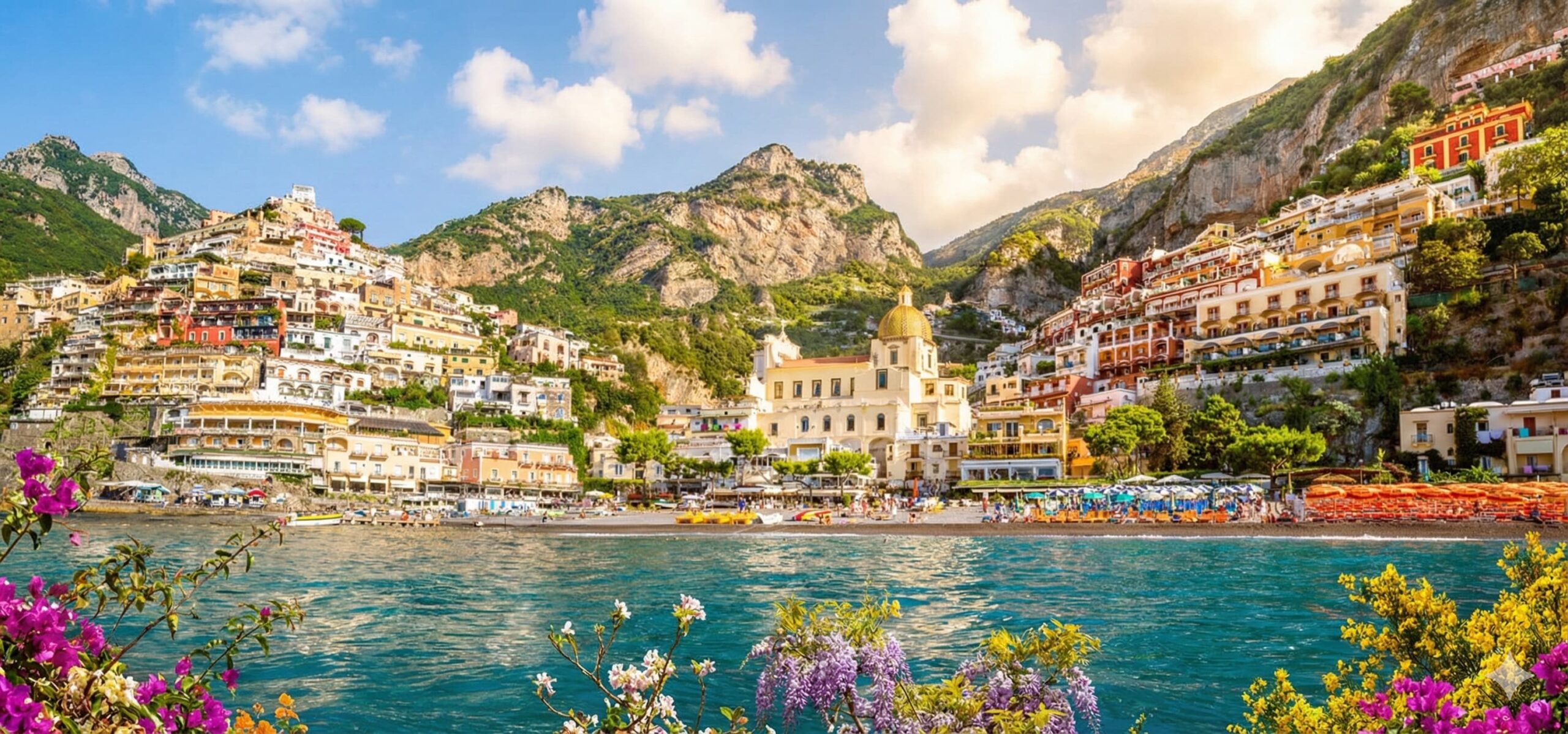
Positano is the glamorous face of the coast—pastel buildings tumbling down steep cliffs toward a picturesque beach, boutiques selling handmade leather sandals, restaurants with terraces overlooking the sea. It’s stunning and it knows it. Spring offers the chance to actually walk its streets without being shoulder-to-shoulder with other tourists, to linger over an espresso in Piazza dei Mulini without feeling rushed. Prices here are the highest on the coast, even in spring, but the Instagram-worthy views are undeniable. For those interested in the local cannabis culture along the Amalfi Coast, know that Positano’s exclusive atmosphere extends to all aspects of local commerce.
Amalfi itself, the historic heart of the coast and once the capital of a powerful maritime republic, offers a different vibe. The magnificent 9th-century cathedral dominates the main piazza, and the narrow streets behind it reveal workshops producing traditional handmade paper. In spring, you can explore the Paper Museum and the Arabic-influenced Chiostro del Paradiso without crowds. Amalfi also serves as the main transportation hub, making it practical for day trips.
Ravello sits high above the coast—about 350 meters up—and feels like a world apart. This is where intellectuals and artists have retreated for centuries: Richard Wagner found inspiration for his operas here, Gore Vidal spent decades writing in his hilltop villa. The gardens of Villa Rufolo and Villa Cimbrone offer some of the most spectacular views in all of Italy. In spring, you can wander these gardens in relative peace. The Ravello Concert Society begins its season in April, offering chamber music performances in historic venues—a far cry from the summer festival crowds. For those staying in Naples and making day trips, Ravello makes a perfect destination.
Praiano, positioned between Positano and Amalfi, represents the quieter alternative. This genuine fishing village has maintained its authentic character better than its more famous neighbors. Spring here means having the terraces and trails largely to yourself. It’s also the starting point (or ending point, depending on your direction) for the legendary Path of the Gods hike.
Minori and Maiori, located east of Amalfi, are decidedly less flashy but offer real value: lower prices, authentic local life, good public transportation connections, and some of the best sfogliatella pastries on the coast. Spring visitors will find a genuine Italian experience here, largely free from tourist-oriented commerce.
The Path of the Gods: A Spring Hiker’s Paradise
Path of the Gods (Sentiero degli Dei)
Italy’s Most Spectacular Coastal Hike
📍 Route
Start: Bomerano (Agerola) → End: Nocelle (above Positano)
🚌 Getting There
SITA bus from Amalfi to Agerola (Bomerano stop) – 40 min, ~€2.60
🎒 What to Bring
🌸 Best Time for Spring
April-May offers wildflowers in bloom, comfortable temperatures, and fewer hikers than summer. Start early morning (8-9 AM) for best light and cooler conditions.
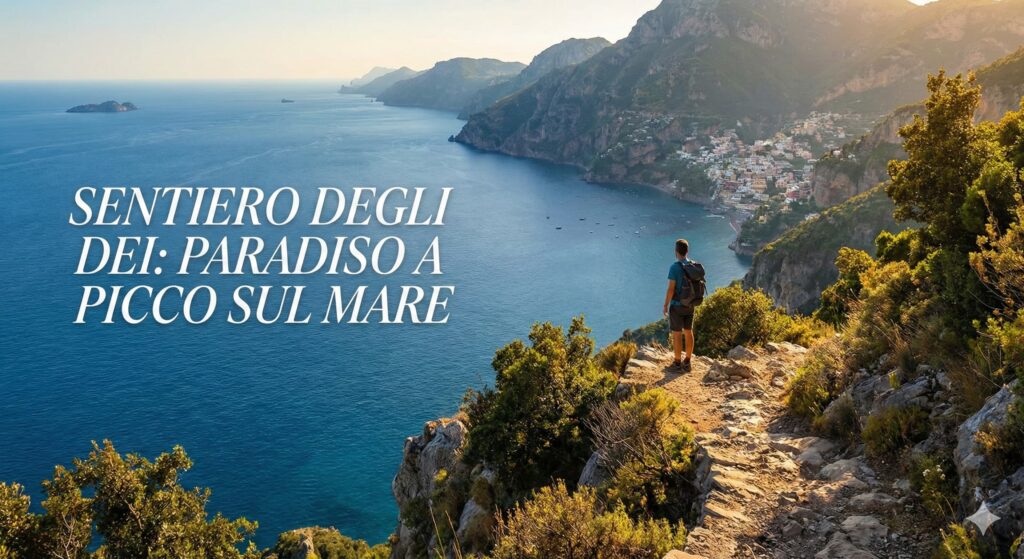
If you do one thing on the Amalfi Coast, make it the Path of the Gods (Sentiero degli Dei). This ancient trail, according to legend, was carved into the earth by Greek deities racing to rescue Ulysses from the sirens. Whether or not you believe in gods, walking this path will make you understand why they chose it.
The main route stretches approximately 7.8 kilometers from Bomerano (in the municipality of Agerola) to Nocelle, a hamlet perched above Positano. The trail averages about 500 meters above sea level, and every step offers jaw-dropping panoramas of the coastline, the island of Capri floating in the distance, and the deep blue Mediterranean far below.
Spring is, without question, the best time to hike this trail. The temperatures are comfortable—starting early in the morning, you can complete the walk before the midday heat becomes an issue. The wildflowers are in bloom, the yellow gorse bushes are vibrant, and the air carries the scent of rosemary and Mediterranean herbs. Most importantly, you’ll encounter far fewer fellow hikers than in summer, when the trail can feel crowded despite its remote beauty.
A few practical tips:
Start from Bomerano and walk toward Nocelle—this direction is mostly downhill and keeps the stunning coastal views in front of you throughout the walk. To reach the starting point, take the SITA bus from Amalfi to Agerola (Bomerano stop). The journey takes about 40 minutes and costs around €2.60.
The walk takes approximately 3 to 4 hours, depending on your pace and how often you stop for photographs (frequently, if you have any sense). The difficulty is moderate—the path is rocky and uneven in places, so sturdy hiking shoes are essential. Flip-flops will get you killed, or at least badly injured.
Bring plenty of water, snacks, sun protection, and a light jacket. Even in spring, the weather can change, and there’s little shade along exposed stretches. The Chiosco degli Dei, a small refreshment stand about halfway through the trail, offers drinks and snacks, but don’t rely on it being open in early April.
From Nocelle, you have two options: descend the 1,500+ steps to Positano (beautiful but brutal on the knees) or take a bus back to Amalfi or Sorrento. Consider your energy levels and knee health before committing to those stairs.
For those who want an easier experience, local guides recommend walking from Bomerano to the halfway viewpoint and returning the same way—you’ll see the most spectacular section of the trail without the logistics of getting back from Nocelle.
If you’re interested in exploring more hiking options, the Cinque Terre on the Ligurian coast offers similar coastal trails, though with a distinctly different character.
Getting Around: Transportation Strategies
🚌 Getting Around the Amalfi Coast
🚂 From Naples
Transportation along the Amalfi Coast has improved significantly in recent years, but it still requires patience and planning. The famous SS163 highway—known as the Amalfitana—is a narrow ribbon of asphalt carved into the cliffs, wide enough for two buses to pass but just barely. In summer, traffic can be nightmarish. In spring, it’s merely challenging.
By Ferry
Ferry service operates from April through October, and it’s by far the most pleasant way to travel the coast. The boats connect Salerno, Amalfi, Positano, and Sorrento, with additional routes to Capri. In spring, especially in April and early May, the schedule is less frequent than in summer, so check Travelmar and other operators for current timetables.
A few ferry tips: sit on the side facing the coast (left side when traveling from Sorrento toward Amalfi, right side in the opposite direction), services may be canceled in rough seas, and booking in advance isn’t usually necessary in spring except on holiday weekends.
Typical fares: Amalfi to Positano costs about €9-10, Positano to Capri about €23 (including the Capri landing tax), and Sorrento to Positano around €17.50.
By Bus
The SITA bus network connects all the major towns along the coast and links to Sorrento and Salerno. The 24-hour COSTIERASITA pass (€10) offers unlimited travel between all coastal towns plus Sorrento—excellent value if you plan multiple trips.
In spring, buses are far less crowded than in summer, though they can still fill up on beautiful weekend days. Board at the beginning of the route (Sorrento or Amalfi) to ensure a seat. Sit on the cliff side for the views, but be prepared for some genuinely terrifying moments as buses squeeze past each other on blind curves.
For detailed guidance on navigating Italian transportation in general, including ZTL zones and traffic restrictions, check our comprehensive guide.
By Car
Unless you’re an experienced driver with nerves of steel, skip the rental car. The roads are narrow, the curves are blind, parking is expensive and difficult to find, and summer traffic restrictions (which can start as early as May on weekends) limit access to certain stretches. If you must drive, do so only on weekday mornings or late in the day.
From Naples
If you’re based in Naples, the most comfortable way to reach the Amalfi Coast is by train to Sorrento (Circumvesuviana line from Napoli Centrale, about 70 minutes) and then ferry or bus onward. Alternatively, ferries run directly from Naples to Capri, from where you can connect to the Amalfi Coast.
Spring Events and Festivals
Spring on the Amalfi Coast brings a calendar of events that showcase the region’s deep cultural roots.
Easter Week (March/April) transforms the coast into a living representation of Italian religious tradition. The Good Friday processions are particularly atmospheric: hooded penitents carry religious statues through candlelit streets, ancient hymns echo off stone walls, and the whole coast seems to pause in reverence. The towns of Minori and Maiori have particularly notable processions. Note that Easter Week brings higher prices and larger crowds, especially from Italian domestic tourists.
Feast of San Marco (April 25th) coincides with Italy’s Liberation Day, creating a double celebration along the coast. Expect parades, traditional events, and a genuinely festive atmosphere.
Amalfi Coast Art Festival (April) transforms the coastal towns into open-air galleries, with works from local and international artists displayed in public spaces throughout Amalfi, Maiori, and Minori.
The Ravello Concert Society begins its season in April, offering chamber music performances in the town’s historic venues. These intimate concerts are a world away from the large-scale summer festival events—a chance to experience world-class music in an uncrowded, authentic setting.
If your trip extends into late spring, check calendars for the various saint day celebrations that each town hosts throughout the year.
Where to Eat: Spring Menus and Seasonal Flavors
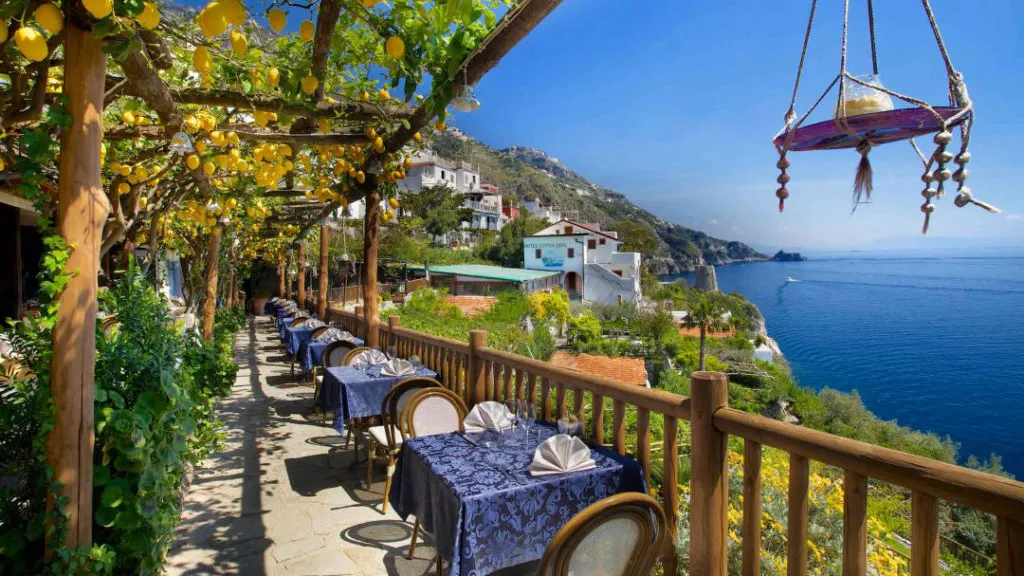
The Amalfi Coast is famous for its cuisine, and spring brings some of the best eating of the year. The menus feature fresh vegetables, the seafood is excellent after the winter fishing season, and everything feels lighter and more vibrant than the heavy comfort foods of winter.
Look for dishes featuring spring vegetables: fava beans, artichokes, wild asparagus. The famous colatura di alici (anchovy sauce from Cetara) goes perfectly with spring pasta dishes. And of course, the lemons—the iconic sfusato amalfitano—appear in everything from granita to risotto to the region’s legendary limoncello.
A few recommendations:
In Positano, skip the overpriced restaurants on the beach and climb up to La Tagliata, a family-run restaurant with fixed-price menus featuring home-grown produce and stunning views. In spring, you can actually get a table without booking weeks in advance.
In Amalfi, La Taverna dei Briganti offers excellent local cuisine in a warm atmosphere without the tourist-trap pricing of the main piazza restaurants.
In Ravello, if your budget allows, Rossellini’s at the Palazzo Avino offers Michelin-starred cuisine with views that justify the prices. For something more casual, the restaurants around the main piazza offer solid traditional dishes.
In Minori, don’t miss the pastry shops specializing in sfogliatella—the shell-shaped pastries filled with ricotta and candied fruit that are perhaps the coast’s greatest culinary contribution to the world.
For a deeper dive into Italian cuisine, including the street food culture of Naples, check our comprehensive guide.
Spring Accommodation: Booking Strategy
Spring offers a significant advantage over summer in accommodation: availability and pricing. Hotels that are fully booked six months in advance for July and August often have rooms available just weeks before a spring visit. Prices, while not cheap (this is the Amalfi Coast, after all), are typically 30-50% lower than peak season rates.
A few strategies:
Book directly with hotels when possible—they often offer better rates or perks (room upgrades, breakfast included) than booking platforms.
Consider Praiano or Minori/Maiori as bases—significantly cheaper than Positano or Ravello, with good transportation connections to everywhere else.
Vacation rentals become more practical in spring, as you’re not competing with families seeking summer accommodations. A small apartment with a kitchen allows you to take advantage of the excellent local markets and produce.
Don’t overlook B&Bs—the Italian pension tradition is alive and well on the coast, and these family-run properties often offer breakfast, local recommendations, and personal attention that large hotels can’t match.
For those extending their trip to Naples, the city offers excellent accommodation value and serves as a perfect base for day trips to the coast.
Practical Tips for Spring Visitors
🌿 Connect with Amalfi Coast Insiders
Real-time advice, trusted recommendations, and local connections for your coastal adventure
Let me share some hard-won wisdom from many spring visits:
Packing: Layers are essential. Mornings can be cool, midday warm, and evenings chilly. A light rain jacket is non-negotiable—spring showers can appear quickly. Comfortable walking shoes are more important than fashionable ones; you’ll be climbing lots of steps.
🧳 Amalfi Coast Spring Packing Essentials
Clothing
Footwear
Hiking Gear
Essentials
Pro Tip: Pack light! You’ll be climbing lots of stairs and navigating narrow streets. A small rolling bag or backpack beats a large suitcase every time.
Timing your days: Start early. The morning light on the coast is magical, the buses are less crowded, and you’ll have attractions largely to yourself before the day-trippers arrive around 10-11 AM.
Avoiding cruise ship days: Large cruise ships continue to disgorge passengers at Amalfi and Positano even in spring, though less frequently than in summer. If possible, check cruise ship schedules for Amalfi and plan your visits accordingly—or use those days to explore quieter towns like Praiano or Ravello.
Money matters: Have cash on hand. Many small businesses, especially in smaller towns, don’t accept cards or have minimum purchase requirements. ATMs exist but aren’t on every corner.
Communication: English is widely spoken in tourist areas, but a few Italian phrases will be warmly received. For a humorous take on language and local customs, check our guide to essential tips for tourists.
Weather awareness: Spring weather can change quickly. Check forecasts before planning boat trips or hikes—services may be canceled in bad weather, and hiking in rain is neither safe nor pleasant.
Beyond the Coast: Day Trips and Combinations
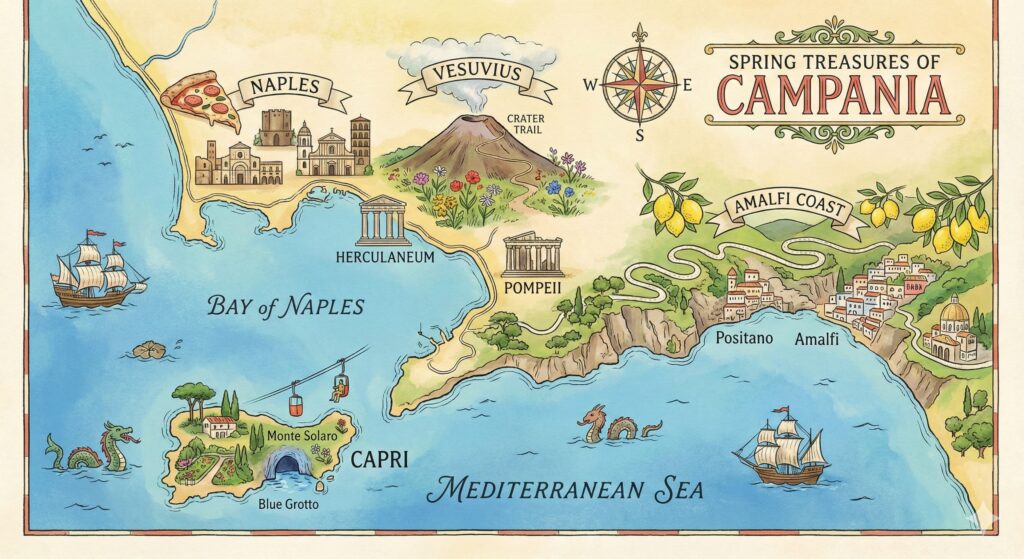
Spring is the perfect time to combine Amalfi Coast exploration with other treasures of the Campania region.
Pompeii and Herculaneum: The archaeological sites are far more pleasant to explore in spring temperatures than under the brutal summer sun. The UNESCO-listed ruins benefit from smaller crowds and comfortable walking conditions.
Vesuvius: The volcano’s crater offers panoramic views of the entire Bay of Naples. The national park is especially beautiful in spring, with wildflowers covering the volcanic slopes.
Capri: The island that has captivated visitors since Roman times is actually enjoyable in spring, before the summer invasion transforms it into a claustrophobic shopping mall. The Blue Grotto, the Gardens of Augustus, and the chairlift to Monte Solaro are all more accessible. Check our Capri guide for more details.
Naples: If you haven’t explored Italy’s most chaotic, beautiful, frustrating, and utterly compelling city, spring is the time. The historic center, the underground tunnels, the world-class archaeological museum, the pizza—all are enhanced by moderate temperatures and somewhat thinner crowds. For comprehensive Naples information, explore our guides on neighborhoods, safety, and hidden gems.
A Note on Cannabis Culture
🌿 Connect with Amalfi Coast Insiders
Real-time advice, trusted recommendations, and local connections for your coastal adventure
⭐ What Travelers Say About Our Guides
“The spring timing advice was perfect. We had Positano almost to ourselves in late April, and the Path of the Gods hike was unforgettable without the summer crowds.”
“Your transportation tips saved us so much stress. Taking the ferry instead of the bus was the best decision. The views were incredible and we avoided the crazy roads.”
“We followed the advice to base in Praiano instead of Positano. Half the price, just as beautiful, and so much more peaceful. The local Telegram contacts were super helpful too!”
Join 12,000+ travelers getting real-time advice for Italy
 Join Our Telegram Community
For readers interested in Italy’s cannabis scene, a brief word: cannabis remains technically illegal in Italy, though personal use is generally tolerated (while never explicitly permitted). The Amalfi Coast, with its exclusive character and high-end tourism focus, is not the easiest environment for cannabis seekers. Prices tend to be higher than in major cities, and discretion is essential.
The coastal towns don’t have the visible cannabis culture you might find in Naples or Rome. If this is part of your travel interests, I’d recommend making connections through our community before your trip. Our Telegram channel connects travelers with locals who can provide real-time advice and trusted recommendations throughout the Campania region.
For complete information on Italian cannabis laws and penalties, check our comprehensive legal guide.
Final Thoughts: Why Spring Changes Everything
The Amalfi Coast in summer is a beautiful but overwhelming experience—fighting for space on buses, sweating through narrow streets, paying premium prices for stressed-out service. The coast in spring is something else entirely: a place that feels as magical as its reputation suggests, with space to breathe, time to linger, and the sense that you’re discovering something genuine rather than just checking off a bucket-list item.
I’ve stood on the Terrazza dell’Infinito in Ravello’s Villa Cimbrone on a May morning, with the entire coastline spread below me in perfect morning light, and not another soul in sight. I’ve hiked the Path of the Gods with wildflowers blooming and the scent of the Mediterranean filling my lungs. I’ve wandered the quiet streets of Positano before the crowds arrived, when the only sounds were church bells and seagulls.
These experiences aren’t possible in July and August. They’re a gift that spring offers to those willing to visit outside the peak season.
Book your trip. Beat the crowds. Experience the Amalfi Coast the way it was meant to be experienced.
And if you need any help planning your adventure—whether that’s finding the best hiking routes, navigating transportation, or connecting with locals who can show you the real Campania—reach out to our community. We’re here to help.
Buon viaggio!
Frequently Asked Questions
What is the best month to visit the Amalfi Coast to avoid crowds? Late April (after Easter) and early-to-mid May offer the ideal balance of pleasant weather, open services, and manageable crowds. Avoid Easter week and the May 1st/April 25th holiday weekends if crowd avoidance is your priority.
Can you swim in the Amalfi Coast in April or May? Water temperatures in April average around 16-17°C (61-63°F), which is too cold for most swimmers. By late May, the water warms to around 19-21°C (66-70°F), and swimming becomes more feasible for those who don’t require Caribbean temperatures.
How many days do you need on the Amalfi Coast? A minimum of three full days allows you to explore 2-3 towns and complete the Path of the Gods hike. Five to seven days provides time for a more relaxed exploration, including day trips to Capri and possibly Sorrento or Naples.
Is the Path of the Gods difficult? The hike is rated moderate. The main challenge is the uneven, rocky terrain and the 1,500+ steps down to Positano if you choose that exit. Reasonable fitness and sturdy hiking shoes are essential; it’s not suitable for those with mobility issues or vertigo.
Do I need to book restaurants in advance in spring? Generally no, except for high-end restaurants (especially in Ravello) on weekend evenings. One of spring’s great advantages is the ability to wander into restaurants spontaneously.
What’s the best way to get from Naples to the Amalfi Coast? Take the Circumvesuviana train from Naples to Sorrento (about 70 minutes), then either the ferry to Positano/Amalfi or the SITA bus along the coast. This route avoids the traffic chaos of the coastal road. For complete Naples transportation information, see our guide.
For more insider guides to Italy, explore our coverage of Rome, Florence, Milan, and Sicily. For travelers deciding between Italian cities, check out our comparison: Should I Visit Rome or Naples?
Complete Guide to Weed in Naples
Everything you need to know about finding and enjoying quality cannabis in Naples.
Read Guide →
Finding Weed in Rome
Navigate Rome’s cannabis scene like a local with our insider tips.
Read Guide →
Cannabis Guide to Florence
Discover Florence’s hidden cannabis culture in the birthplace of Renaissance.
Read Guide →
Join Our Naples Insider Community
Get real-time advice, exclusive locations & connect with locals on Telegram
Leave a Reply